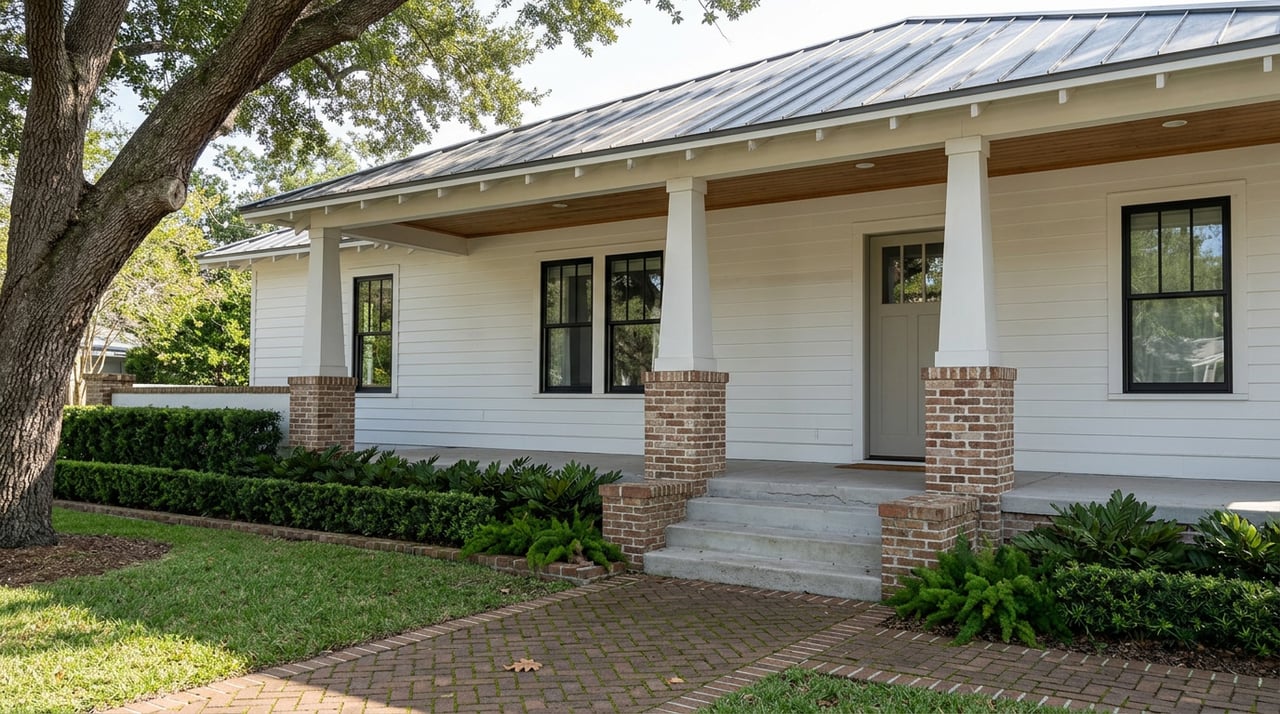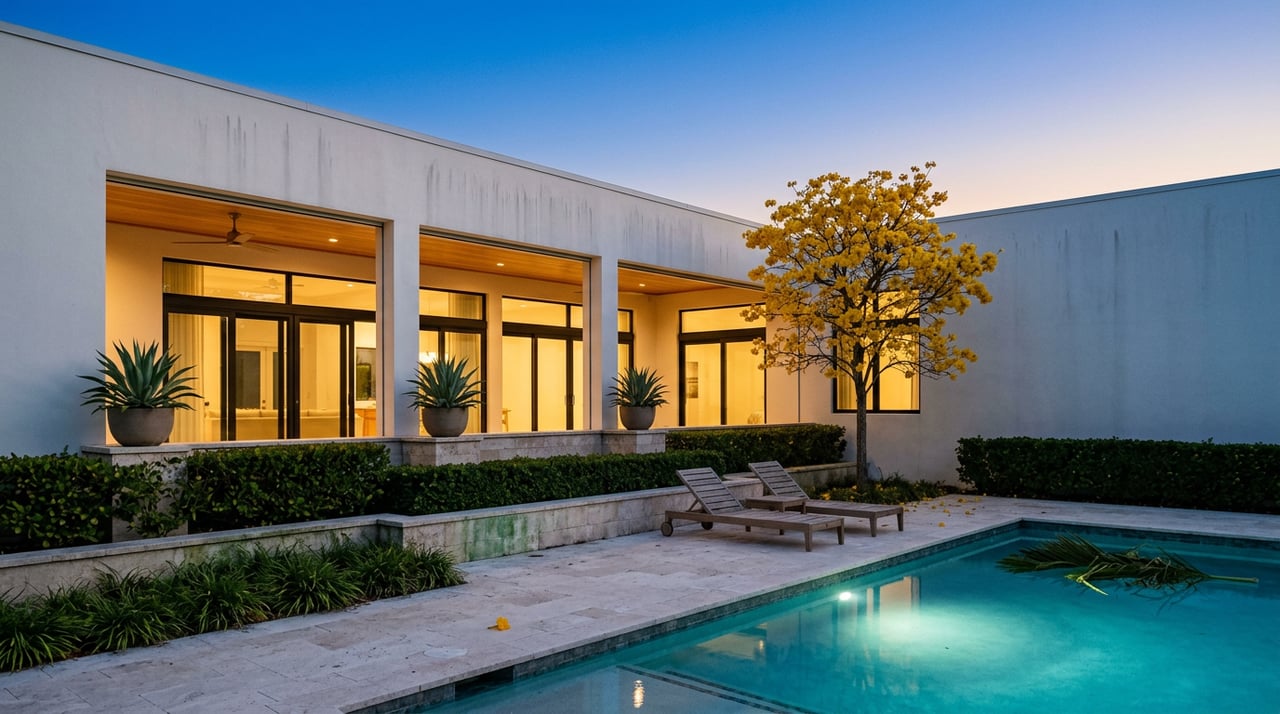
A buyer touring a Gulf-side cottage on St. Pete Beach this summer will likely see two kinds of rooms in the same house: one with fresh drywall, updated outlets, and a kitchen that looks like it came out of a 2025 renovation, and another down the hall with the same jalousie windows and terrazzo the house had in 1968. That split isn't a design choice. It's usually the visible edge of a number the seller has been watching closely and the listing sheet never mentions: how close the last two years of repairs have pushed the house toward its 50 percent ceiling.
Nearly every parcel on St. Pete Beach sits inside a FEMA-designated flood hazard zone, most of it in the stricter VE classification that also covers wave action. That single fact drives more of what happens to a home's price and its renovation options here than almost anything else in the transaction. And it's the piece that a falling median sale price, on its own, does not explain.
The Rule That Turns a Renovation Into a Rebuild
St. Pete Beach calls it the 50% Rule, and the mechanics are straightforward even when the consequences aren't. If the cost of repairing, remodeling, or adding onto a structure equals or exceeds half of that structure's market value before the work started, the entire building has to be brought up to current flood code, not just the portion being touched. In practice, that usually means elevating the whole house, along with its electrical and mechanical systems, above the base flood elevation. For a home that was never designed to be lifted, that's not a renovation line item. It's a different project entirely.
The city tracks this on a rolling one-year clock that starts the moment the first permit is issued, and it explicitly does not allow homeowners to break a big project into smaller phases to stay under the line. City documents are direct about it: phasing improvements across multiple consecutive permits to dodge the threshold is not permitted. That closes a workaround that homeowners in some other Pinellas jurisdictions have used to spread renovation costs across separate years. On St. Pete Beach, the accumulation follows the building, not the calendar year.
What counts toward that 50 percent is broader than most buyers expect. Labor and materials both count, including the value of an owner's own sweat equity if they're doing work themselves. Anything permanently attached to the structure counts. What doesn't count: loose furniture, freestanding appliances, and similar items that aren't part of the real property. If a storm-damaged home needed new drywall, cabinetry, flooring, HVAC, and electrical rough-in all at once, as many did after 2024, that combination adds up fast against a modest pre-storm valuation.
The Grace Window Already Closed
Sellers and agents who worked through 2024 and 2025 got used to a city that was actively softening its permitting rules to keep more storm-damaged homes repairable rather than forcing teardowns. In November 2024, commissioners voted to uncouple storm damage from voluntary remodeling in the substantial improvement calculation, so a roof repaired after Hurricane Milton wouldn't count against a kitchen renovation planned two years later on a separate track. That change matters, but it's easy to describe an environment that no longer exists as if it still does.
The city also opened a narrower amnesty window this year, running from February 11 through June 30, 2026, that let homeowners complete certain minor repairs without a permit at all: replacing carpet over existing subfloor, applying temporary tarps, clearing storm debris, patching a small run of asphalt shingles, or fixing a minor water leak that doesn't touch structural, mechanical, or electrical systems. That window closed at the end of June. Any exterior work, structural repair, or system replacement started today goes back through standard permitting and standard 50 percent review, full stop. A buyer relying on secondhand impressions of a looser, post-storm St. Pete Beach is working from outdated information.
"Based on staff discussions with property owners, many are simply seeking to restore the interior of their structures, or make minor exterior repair and maintenance that will restore the structure with the same materials as it possessed prior to the loss," city planner Brendon Berry told commissioners in November 2024, describing the wave of applications the relaxed rules were meant to address.
Pass-a-Grille Runs on a Separate Rulebook
There's one meaningful carve-out, and it sits at the south end of the island. The Pass-a-Grille Historic District, listed on the National Register in 1989 and expanded in 2003, covers 451 contributing buildings across the district's original and expanded boundaries. Structures on the local historic property registry, or contributing to that district, may be exempt from the 50 percent rule. The word doing the work in that sentence is "may." The city's own guidance tells owners to consult with Planning and Zoning before assuming a property qualifies, because contributing status and eligibility for the exemption aren't automatic just because a house sits inside the historic boundary. For a buyer comparing two similarly priced cottages, one inside Pass-a-Grille's district lines and one a few blocks north, the renovation math can diverge sharply even if the structures look nearly identical from the street.
What a Repair Actually Costs Once It Crosses the Line
For homes that don't qualify for the historic carve-out, crossing the 50 percent threshold means a structural lift, and St. Pete Beach's VE zone designation adds requirements that AE zone homes elsewhere in Pinellas don't face: driven pilings and open, breakaway foundations regardless of the existing structure's condition. Those requirements push the cost of compliance higher on the beach than on comparable inland lots.
| Path | What it involves | Typical cost range |
|---|---|---|
| Repair under the threshold | Cosmetic and system repairs that stay below 50% of pre-damage value | Scope-dependent, no elevation required |
| Structural lift on an existing home | Jacking the house, driving new pilings, reconnecting utilities | $150,000 to $250,000 for the lift itself, before finish work |
| New elevated construction (AE-zone baseline) | Full demolition, pile foundation, ground-up build to current code | $600,000 to $750,000 for a 1,500-square-foot build on an AE-zone lot; VE-zone beach lots run higher because they require driven pilings and breakaway walls regardless of the prior structure |
Flood insurance is part of this math too. Homes in AE and VE zones on the beach commonly carry annual premiums well into five figures under current federal risk-based pricing, and elevating a structure above base flood elevation typically cuts that premium meaningfully. For a buyer weighing a discounted, unelevated cottage against a newer elevated build a few doors down, the insurance line and the compliance exposure move together, not separately.
What the Median Is Actually Showing
Here's where the market data stops looking like a simple discount. In May 2026, the average sale price on St. Pete Beach was $543,000, down 22.5 percent from a year earlier. Over the three months ending in May 2026, the median sale price came in at $605,000, homes took an average of 83 days to sell compared with 45 days the year before, and 114 homes closed compared with 91 the year before.
Read that last figure again. Sales volume went up while the price went down and homes sat longer. That combination doesn't fit a story where buyer demand simply evaporated. It fits a story where a specific category of home, older pre-code construction carrying real substantial improvement exposure, is moving through the market at a real discount while newer or already-elevated homes hold their value and take longer to find the right buyer at the right price. The falling median isn't evidence that St. Pete Beach got cheaper across the board. It's evidence that the market is sorting itself by a compliance line that most listing sheets never mention.
What to Check Before You Write an Offer
For anyone looking at a below-median listing on the beach, a few questions do more work than a home inspection alone:
- Ask for the property's permit history through the city's online permitting portal, and add up what's been spent on repairs since the last time a permit was closed.
- Request the elevation certificate if one exists, or budget for one if it doesn't. It's required for insurance purposes and it's a small cost relative to what it tells you.
- Confirm whether the home is inside the Pass-a-Grille Historic District boundary or on the local historic registry, and if so, get written confirmation from Planning and Zoning rather than assuming the exemption applies.
- If the home shows storm-related repair work, ask directly whether a substantial damage determination was ever issued and what that determination said.
Frequently Asked Questions
Does the 50% Rule only apply to storm-damaged homes, or any renovation? Any renovation. The rule applies to voluntary remodeling and additions the same way it applies to storm repair. What changes with storm damage is that the city treats the repair costs as automatically counting toward the threshold, regardless of what work is actually performed.
Can I do the work in phases to stay under the threshold? Not on St. Pete Beach. The city's ordinance specifically disallows phasing a project across multiple permits to avoid the 50 percent calculation, and the accumulation clock runs on a rolling one-year basis from the first permit issued, not by calendar year.
Does a historic designation guarantee an exemption? No. Being on the local historic registry or contributing to the Pass-a-Grille Historic District may make a property eligible for an exemption, but eligibility isn't automatic. The city recommends confirming status directly with Planning and Zoning before assuming a project is exempt.
A listing price on St. Pete Beach tells you what a seller is asking. It doesn't tell you what the next owner is legally allowed to spend on that house before the whole structure has to come up to code. That's a conversation worth having before an offer goes in, not after closing.
If you're weighing a St. Pete Beach property against other spots in Tampa Bay, or trying to figure out what a specific address's repair history actually means for your plans, Casey Franks can walk through the permit record and the numbers with you. Let's Connect.