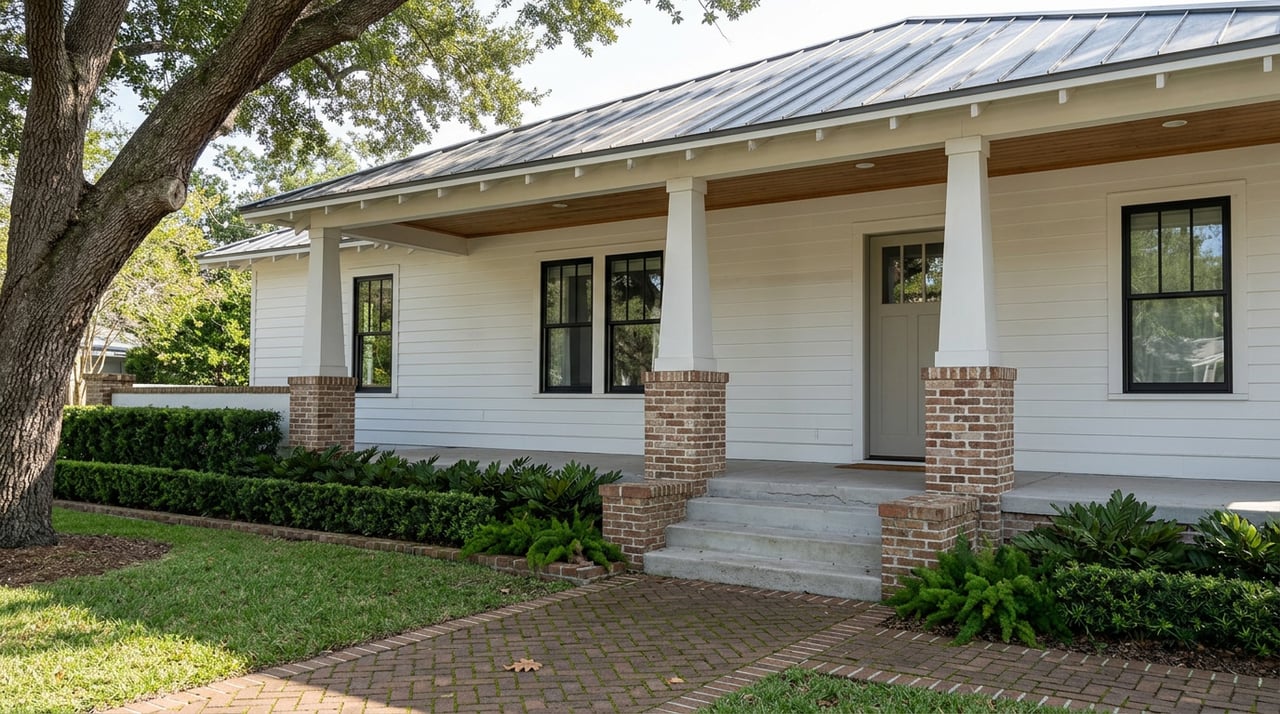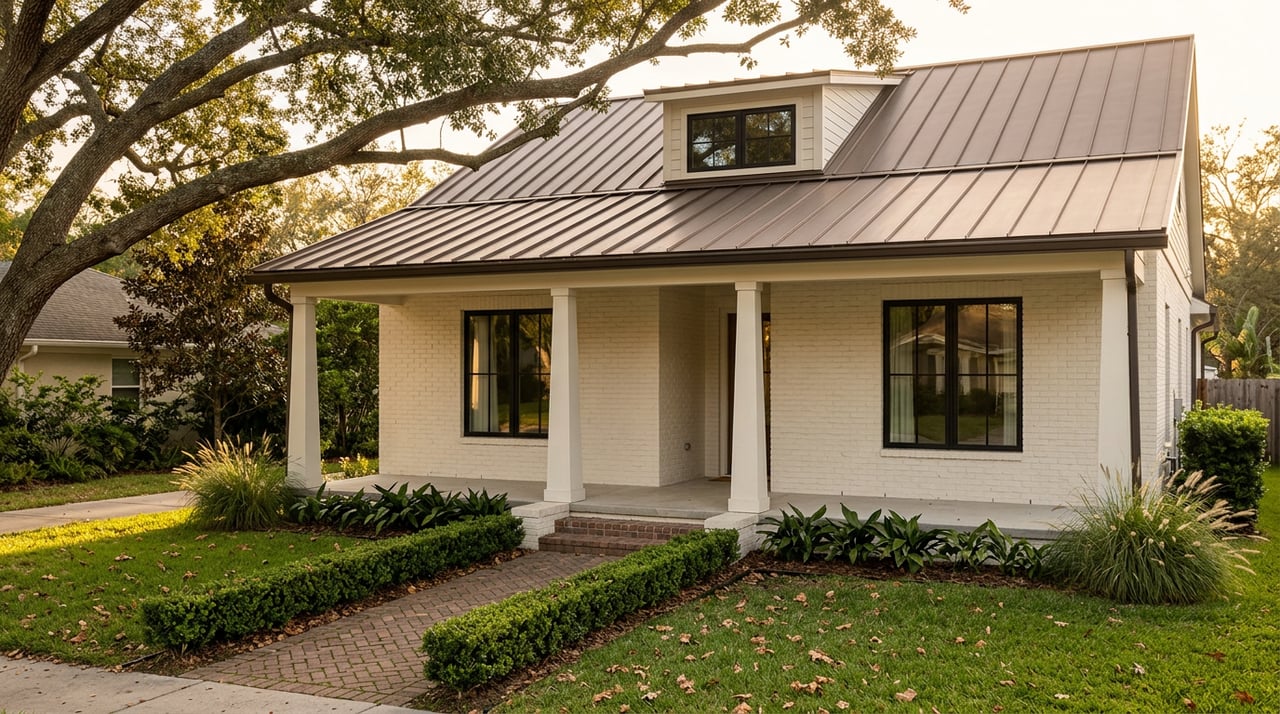
A homeowner two blocks off Central Avenue submits a permit to change the porch railing on a 1926 bungalow and waits nearly four months for the city to sign off. A builder one street over pours the foundation for a three-story townhome with a private rooftop terrace and gets a standard building permit with no historic review at all. Both addresses carry the same neighborhood name. Only one of them sits inside a district with the legal authority to say no, and that distinction, not the neighborhood's reputation for craftsman charm, is what decided each outcome.
"Historic Kenwood" gets used as a single phrase, but it is actually two overlapping designations that do very different things. Understanding which one applies to a specific parcel matters more than almost anything else a buyer or renovator will learn about the neighborhood, because it determines whether a project takes five weeks or five months, and it explains why brand-new construction keeps rising a few doors down from homes built in the 1920s.
One Neighborhood Name, Two Very Different Rulebooks
Kenwood was added to the National Register of Historic Places on August 4, 2003. The listing covers roughly 375 acres and 2,203 buildings, bounded by 9th Avenue North, 1st Avenue North, 19th Street North along I-275, and 34th Street North. That designation is honorary. For a private residential property, National Register status carries no requirement to submit exterior changes for review, no restriction on demolition, and no say over what a builder puts up on an empty or torn-down lot.
Nested inside that same footprint are four much smaller local historic districts: Seminole Park, Northwest Kenwood, Southeast Kenwood, and a 12-block addition in southwest central Kenwood that the city's Community Planning and Preservation Commission approved in March 2021. These are the districts with actual enforcement power. Any exterior change on a property inside one of the four, a new roofline, replacement windows facing the street, an addition, a demolition, new construction, requires a Certificate of Appropriateness before the city will issue a building permit.
| National Register listing | Local historic district | |
|---|---|---|
| Footprint | Roughly 2,203 buildings across 375 acres, most of Kenwood | Four smaller pockets nested inside that footprint |
| Reviews exterior changes | No | Yes, Certificate of Appropriateness required before a building permit is issued |
| Who decides | No local review body | City preservation staff, with significant cases going to the Community Planning and Preservation Commission |
| Typical timeline impact | None | Staff-level approvals move quickly; anything the Commission has to hear adds roughly two to four months |
Interior work, kitchens, bathrooms, floors, is never subject to this review anywhere in Kenwood, local district or not. The distinction only bites on the outside of the house.
The Four Small Districts With Actual Teeth
Kenwood residents pushed for the local designations themselves, block by block, over the past two decades. When the city's Community Planning and Preservation Commission voted unanimously in March 2021 to approve the southwest central Kenwood district, neighborhood representative Brenda Gordon told the commission that the goal was straightforward: keep new construction compatible with what was already there, and slow down demolition of the bungalows that survived the neighborhood's rougher decades in the 1970s through the early 2000s.
The friction shows up when new owners arrive without realizing their block is one of the four.
"People who have come in new to the neighborhood don't really understand the COA process."
That's a real, recurring issue according to St. Petersburg reporting on the district's expansion, and it's the exact scenario that turns a straightforward exterior remodel into a multi-month delay nobody budgeted for.
If your address falls outside all four local districts but inside the broader National Register area, a Certificate of Appropriateness isn't part of your process at all. Confirming which category applies before finalizing a design, not after, is the single most useful thing a buyer or renovator can do here.
Why New Townhomes Keep Rising Next to 1920s Porches
This two-tier structure is exactly why Kenwood currently has two very different construction stories happening at once.
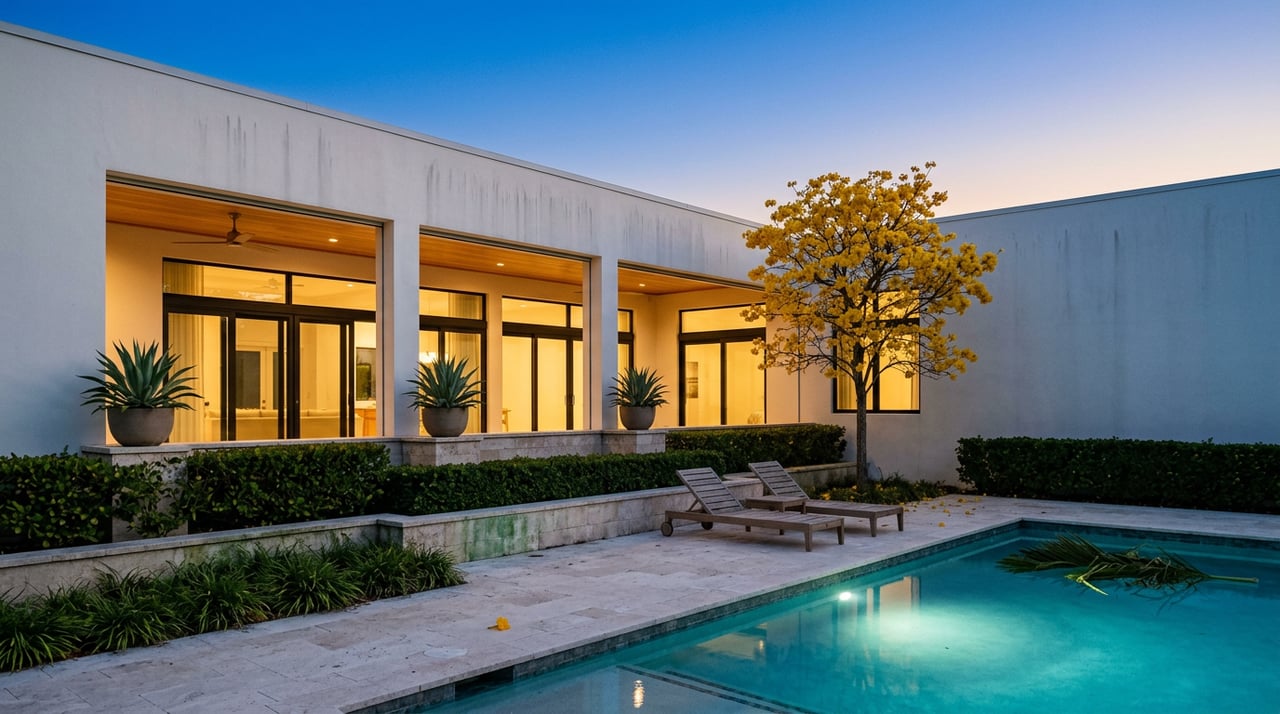
Walk the blocks inside the National Register footprint but outside the four local districts, and you'll find active infill: Onyx+East is building a luxury townhome community steps from Central Avenue, David Weekley Homes has a project called Towns at Union under construction in the neighborhood, and Canopy Builders has a craftsman-style spec home and a duplex underway with an estimated completion of December 2026. A Mobley Homes Custom LLC listing markets a new luxury spec home with a Sub-Zero, Wolf, and Cove appliance package, explicitly noting it carries no flood insurance requirement.
None of that construction needed a Certificate of Appropriateness, because none of it sits inside Seminole Park, Northwest Kenwood, Southeast Kenwood, or the southwest central district. A block away, inside one of those four, a homeowner wanting to add a second story or change a front-facing window is looking at staff review at minimum, and if the change is significant enough to go before the Community Planning and Preservation Commission, a real wait of two to four months before a building permit can even be pulled.
This is the citywide pattern, not something unique to Kenwood. Local preservation advocates note that St. Petersburg has ten local historic districts total, nested within five much larger National Register districts, and each local district was approved on its own timeline through its own ordinance. Old Northeast has the same structure, with its own local district, Granada Terrace, sitting inside the larger Northshore National Register area.
What the Median Price Is Actually Blending
Here's where the two-tier structure shows up in the numbers buyers actually see.
As of March 2026, Historic Kenwood's resale median sat at $563,000, down sharply from a year earlier, with only 16 homes sold that month compared to 26 the year before and average days on market climbing from 36 to 60. That's a small enough sample that a handful of unusual sales can swing the headline number without the underlying market actually softening.
Meanwhile, the new-construction listings inside the same "Historic Kenwood" search boundary, the Onyx+East units, the Canopy Builders spec homes, the Mobley Homes luxury build, were carrying a median asking price of $789,000, with luxury listings specifically averaging $707,000 and typically selling in under two months. For comparison, St. Petersburg's citywide median sat near $415,000 in mid-2026.
Those aren't two prices for the same product drifting apart. They're two different products, a 1,200 to 1,800 square foot bungalow on a pier-and-beam foundation versus a new-build townhome with a two-car garage and hurricane-rated construction, both getting counted under one neighborhood name. When a bungalow resale falls through or a stretch of the market goes quiet on the resale side while new construction keeps closing, the blended median moves in ways that have nothing to do with what any individual property is actually worth.
Before You Write an Offer or Pull a Permit
If you're comparing Kenwood to other St. Petersburg neighborhoods, or comparing a bungalow resale to a new-construction listing inside the same boundary, a few questions are worth asking before you get attached to either:
- Is this specific parcel inside Seminole Park, Northwest Kenwood, Southeast Kenwood, or the southwest central district, or is it only within the broader National Register footprint?
- If it is inside one of the four, does your plan involve anything visible from the street? Interior work skips the process entirely.
- If exterior work is involved, is it minor enough for staff-level approval, or significant enough to require a hearing before the Community Planning and Preservation Commission?
- For a resale bungalow, has anything structural already been addressed, cast iron drain lines, panel upgrades, load-bearing wall conditions, that a Craftsman-era home this size commonly needs before a kitchen or bath renovation can move forward?
None of these show up on a listing sheet. They show up when you call the city's historic preservation staff or ask someone who has actually walked a project through the process.
Frequently Asked Questions
Does National Register listing protect my home from being altered or torn down by a neighbor? Not on its own. For private residential property, the National Register designation is honorary and carries no review authority. Protection against incompatible demolition or new construction only exists where a property also sits inside one of Kenwood's four local historic districts.
What actually triggers a Certificate of Appropriateness review? Any exterior change on a property inside a local historic district: additions, roofline changes, street-facing window replacements, demolition, or new construction. Interior renovations never require it, regardless of district status.
How long does the review actually add to a project? Minor changes can get staff-level approval quickly. Anything significant enough to go before the Community Planning and Preservation Commission adds a minimum of four to six weeks past that, and in practice closer to two to four months from submission to permit.
How do I find out which category my specific address falls into? The city's Historic Preservation program maintains mapping resources that show whether a parcel sits inside a local historic district or only within the National Register area. Checking before finalizing a design, rather than after, avoids the most common source of delay.
Kenwood rewards patience whether you're buying a bungalow or planning a renovation, but the patience required depends entirely on which side of an invisible boundary your address falls. If you're weighing a Kenwood bungalow against new construction a few blocks over, or trying to figure out what a specific St. Petersburg address actually allows, Casey Franks can walk the district maps with you before you write an offer. Let's Connect.